.jpg?width=1170&height=582&name=Depositphotos_326624546_L%20(1).jpg)
Serving alcohol responsibly means recognising intoxication, slowing or stopping service when needed, and following your establishment’s policies and local laws. To avoid over-service, servers must monitor guests closely, communicate with their team, and refuse alcohol when necessary.
In this blog, we break down these practices and offer practical tips to help protect patrons and the wider community from alcohol-related harm.
Why Is Avoiding Over-Service Important for Alcohol Servers?
What Must an Alcohol Server Do to Avoid Over-Service?
What Signs of Intoxication Should Alcohol Servers Watch For?
How Should a Server Refuse Alcohol Service Safely and Professionally?
How Alcohol Server Training Helps Prevent Over-Service
What Does Over-Service Mean?
Over-service happens when a server continues to provide alcohol to a guest who is already intoxicated or at risk of becoming intoxicated. In the United States, alcohol service laws are designed to hold businesses and staff accountable for this.
In simple terms, over-service is preventable. It usually occurs when servers miss warning signs, serve drinks too quickly or fail to communicate with coworkers. Understanding this definition is the first step toward safer service.
Why Is Avoiding Over-Service Important for Alcohol Servers?
Avoiding over-service protects more than just your workplace - it protects people. When a guest becomes intoxicated, the risks increase quickly, including accidents, injuries and unsafe behavior.
For Alcohol Servers and their employers, the consequences can include fines, job loss or legal liability depending on state laws. Many states enforce strict penalties, which means establishments can be held responsible for harm caused by intoxicated patrons.
Reminder: Alcohol laws vary by state, so always check your local regulations or alcohol authority guidelines.
What Must an Alcohol Server Do to Avoid Over-Service?
To prevent over-service, Alcohol Servers need to stay proactive and attentive throughout a guest’s visit. Here are the key steps every server should follow:
- Check IDs carefully
Always verify age before serving alcohol. Serving minors can lead to serious penalties and increases the risk of unsafe situations. - Monitor alcohol consumption
Keep track of how many drinks each guest has ordered and how quickly they are drinking. Pace matters just as much as quantity. - Watch for behavior changes
Subtle shifts in speech, coordination or mood can signal early signs of intoxication. Acting early helps prevent escalation. - Slow down or stop service
If a guest shows signs of intoxication, switch to water or food service and avoid offering more alcohol. - Communicate with your team
Let coworkers and managers know if a guest may be approaching intoxication. Team awareness helps maintain consistency. - Offer alternatives
Suggest non-alcoholic drinks or food to help reduce alcohol intake and give guests time to recover.
Tip: Preventing over-service is easier than managing it once it happens. Stay alert from the first drink, not the last.
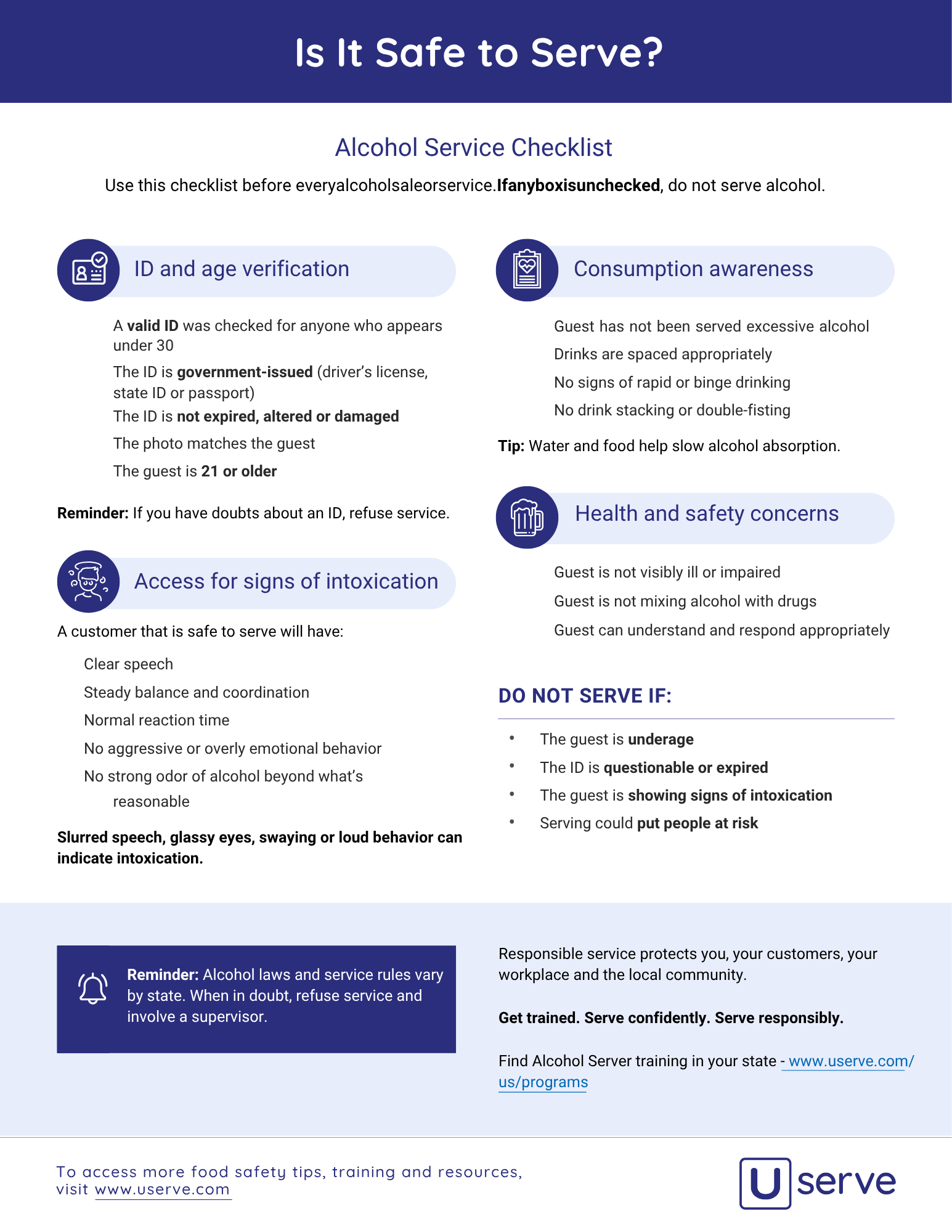
What Signs of Intoxication Should Alcohol Servers Watch For?
Recognizing intoxication early is one of the most important responsibilities a server has. Signs can vary from person to person, but common indicators include:
- Slurred or loud speech
- Poor coordination or stumbling
- Slowed reaction times
- Aggressive or overly friendly behavior
- Difficulty focusing or confusion
These signs often appear gradually. A guest may seem fine at first but become impaired quickly, especially if they are drinking on an empty stomach or consuming high-alcohol beverages.
Watch out: Some guests try to hide intoxication. Pay attention to patterns, not just isolated behaviors.
How Should a Server Refuse Alcohol Service Safely and Professionally?
Refusing service can feel uncomfortable, but it is a critical part of responsible alcohol service. The goal is to keep everyone safe while maintaining professionalism.
Start by staying calm and respectful. Use clear, simple language and avoid blaming the guest. For example, you can say you are unable to serve another drink at this time.
If needed, involve a manager or supervisor to support the decision. It is also important to avoid escalating the situation. Keep your tone neutral and focus on safety and the law.
Reminder: You have the right and responsibility to refuse service when necessary.
How Alcohol Server Training Helps Prevent Over-Service
Professional training gives servers the confidence to make the right decisions in real time. Userve’s online Alcohol Server/Seller Training Programs teach you how to recognize intoxication, understand legal responsibilities and handle difficult situations.
With the right training, you are better prepared to protect yourself, your guests and your workplace while also ensuring compliance with local alcohol service laws.
Ready to build safer habits and stay compliant? Find Alcohol Server/Seller Training in your state.
Frequently Asked Questions
What is over-service?
Over-service is providing alcohol to someone who is already intoxicated or showing signs of impairment.
Can an Alcohol Server get in trouble for over-service?
Yes. Depending on state laws, servers and businesses may face fines, penalties or legal liability.
How can Alcohol Servers tell if someone is intoxicated?
Look for signs like slurred speech, poor coordination and changes in behavior or mood.
Is it legal to refuse service to a guest?
Yes. Alcohol Servers are expected to refuse service to intoxicated individuals to comply with alcohol laws.